Showing posts with label industrial design. Show all posts

Monday, April 26, 2021

Building value and growth for small businesses

By Julian Crump, President of the International Federation of Intellectual Property Attorneys (FICPI)

There's a myth that protecting intellectual property (IP) is the preserve of larger firms and is unsuited to smaller and medium-sized enterprises (SMEs).

While large companies invest in IP for good reasons – to protect their products and services, discourage competition and create new revenue streams for themselves – IP undoubtedly benefits smaller businesses too.

SMEs that apply for patents, trademarks or designs are more likely to grow quickly and succeed than those that do not.

In fact, the evidence is that SMEs that apply for patents, trademarks or designs are more likely to grow quickly and succeed than those that do not.

A 2019 EPO/EUIPO study pdf demonstrated that SMEs that have at least one IP right are 21 percent more likely to experience a growth period. Meanwhile, a 2021 update to the study found that fewer than 9 percent of SMEs owned at least one of the three main IP rights (a patent, trademark and design). By contrast, the figure is close to 60 percent for larger firms. This reveals a shocking disparity in the use of such a valuable business tool.

The value SMEs gain from protecting their IP assets comes in many forms

As well as serving as the current president of FICPI, I am a Chartered UK and European Patent Attorney, and a partner in the firm of Abel + Imray in London, Bath and Cardiff, UK and Spain. To look for examples of SMEs that use IP protection as a key element of their business success, my partners and I reviewed our list of clients.  We did not have to look far.
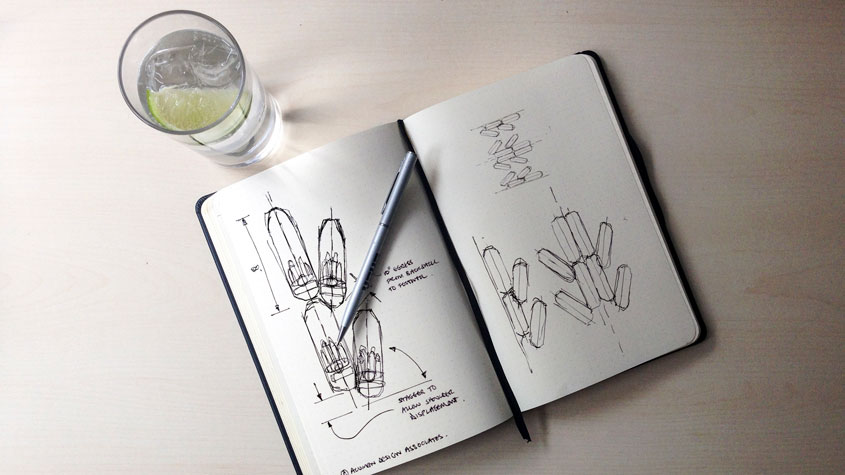
Several years ago, aircraft seating designers Acumen Design Associates moved from a consultancy model (with revenue based on project fees), to also creating their own designs, which are then patented. Today, a major part of Acumen’s revenue comes from issuing licenses for the use of their protected designs. (Photo: Courtesy of Acumen Design Associates)

The results are instructive and hugely encouraging for other SMEs:

  • Growing license sales and royalty revenue - Several years ago, market-leading aircraft seating designers Acumen Design Associates, led by founder Ian Dryburgh, moved from a consultancy model, with revenue based on project fees, to also creating their own designs, which are then patented. Today, a major part of Acumen’s revenue comes from issuing licenses for the use of their protected designs - including a large deal in 2016 with United Airlines for business class seating.

  • Winning venture capital (VC) funding XYZ Reality Ltd., has won numerous accolades for a highly accurate, “engineering grade” augmented reality (AR) solution which ensures building construction matches exactly the architects’ drawings. Their solution avoids problems with traditional site setting-out methods and penalties for errors. The patent application was complicated, involving multiple disciplines from advanced engineering to AR and physics. A positive opinion on the application from the European Patent Office (EPO) helped XYZ Reality secure venture capital (VC) funding.

Over and above the underlying product or service it protects, IP is a valuable asset in its own right. Indeed, it can become a company's most valuable asset.

  • Making SMEs more valuable for acquisition - Siltbuster Limited is recognized as the UK’s top provider of on-site water treatments and is a winner of the Queen’s Award for Enterprise. A big factor in its success has been the patenting of breakthroughs by the company’s founder, Dr Richard Coulton, who began with a vision of treating concrete wastewater at construction sites in a more environmentally friendly way. In 2018, the technology caught the eye of Workdry International, which ended up purchasing Siltbuster – and its IP.

  • From university research to university spin-out - A research project at University College London investigating how to transfect cells using siRNA morphed into a small company, NanoGenics Limited. A few years – and several research cycles – later, NanoGenics developed LipTide® to target selected genes and better combat cancer. The company sold the associated IP rights for GBP 4.5 million (approx. USD 6.2 million), helping their cutting-edge medical development advance to commercialization.

  • Using trade secrets to stay under competitor radar - Today, Rheon Labs Ltd., which makes protective body wear for high-impact sports, is a strategic and sophisticated user of IP. Initially, they relied on trade secrets to protect selected aspects of their IP, staying under their competitors’ radars (rather than filing patent applications, which are automatically published after 18 months). However, once others started encroaching on their field, Rheon Labs pivoted to patenting. This put their technology into the public domain, but in return they gained 20 years of exclusivity and their competitors must now devise their own new and inventive products if they wish to secure their own patents.
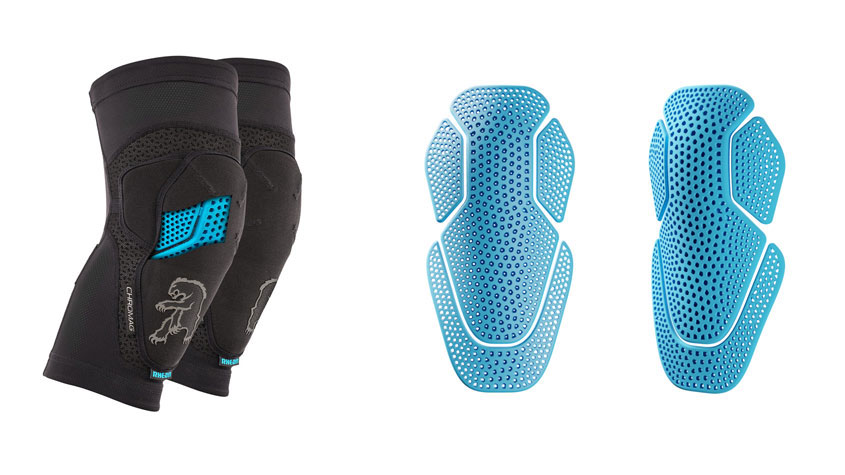
Rheon Labs Ltd., who make protective body wear for high-impact sports, is a strategic and sophisticated user of IP. (Photo: Courtesy of Rheon Labs Ltd.)
  • Trademarks to underpin commercial partnerships - The Rheon Labs® trademark was registered early, when pre-filing searches indicated there were few third-party rights that might prevent its use. As the company grew and moved into the realm of collaborations and commercial partnerships, water-tight non-disclosure agreements (NDAs) and design registrations were added to its IP estate. Rheon Labs® now has strong brand recognition, and the company benefits from valuable goodwill in its name. Registration serves to lock in that value, provides a visible sign of ownership, and facilitates co-branding with partners like Xenith LLC, a top American football helmet manufacturer, whose products now carry the Rheon Labs® trademark, and are recognized for reducing concussive impacts and associated brain injuries, alongside their own. Without registration and water-tight licensing arrangements, allowing a third party to apply your trademark to their goods would put you at risk of losing it. Registration typically protects a company’s marks for 10 years, but with the advantage that they can be renewed in perpetuity – as long as they don’t become generic terms.

  • Creating valuable IP assets to demonstrate market potential - Ceres Power is a company with patented "deep technology" that has a wide range of clean energy applications and has become a hugely valuable asset. However, had commercialization specialists, IP Group Plc, not stepped in at a critical moment, the company would likely have declared bankruptcy following the failure of initial field trials. IP Group works with early-stage companies that own IP originating from university research to get them to a point where they can demonstrate the real-world viability of their technology to attract co-investment from large corporates and ultimately acquisition. IP Group's Dr. Rob Trezona told me, "IP is a table stake. If our portfolio companies haven't secured their IP rights, they won't be able to raise finance. And typically, investors are looking for a number of patents rather than one or two." Key to IP Group’s successful turnaround of Ceres was the realization that its world-class IP position would allow it to generate more value as a technology provider that jointly develops and licenses technology than as a vertically integrated manufacturing business. The company has partnered successfully with Bosch, Doosan and Weichai Power to develop products for data centers, distributed generation and heavy road vehicles, and is able to generate value for itself through license fees and royalties.

NanoGenics Limited, an innovative, research-based gene therapy company, sold IP rights for its LipTide® therapy for GBP 4.5 million (approx. USD 6.2 million), helping their cutting-edge medical development advance to commercialization. (Photo: Courtesy of NanoGenics Ltd.)

These examples illustrate how, over and above the underlying product or service it protects, IP is a valuable asset in its own right. Indeed, it can become a company's most valuable asset. Without doubt, there will be countless other examples among the clients of other IP firms worldwide.

IP rights create a protective wrapper around an intangible asset – locking in value and making it tradeable, through licensing, pooling, securitization or acquisition. Without IPRs, investments made by companies in developing new products and processes, or even in simply devising new product ideas, are at risk. It's a bit like creating a beautiful garden without putting up a fence to keep the rabbits out!

Without the help of a specialist IP attorney, an SME is unlikely to be able to identify the important points of novelty or broad utility of their inventions, which are vital for a successful IP strategy, or may simply be defeated by the registration process.

Indeed, for SMEs, tackling IP protection can seem impossible. Seeking to obtain patent, trademark and design rights is complex. There are relatively few "self-filers", and of those few, the majority abandon their applications or are unsuccessful in gaining granted rights.

As a patent attorney, I obviously have a self-interest in pointing out the depth and sophistication of the services offered by independent IP professionals to SMEs.

IP rights create a protective wrapper around an intangible asset – locking in value and making it tradeable through licensing, pooling, securitization or acquisition.

However, given the stakes, the clear evidence that SMEs holding IP rights prosper relative to others that do not, and the all-too-frequent failure of SMEs to complete the application process on their own, the conclusion is clear.

SMEs should look to protect their IP assets to support and accelerate their growth by locking in the value of their IP and building intangible assets which can be used to underpin a wide variety of different business models, with innovation at their core.

Independent IP attorneys bring wide experience from advising a broad range of different clients. They can look beyond the immediate applications of an invention to focus on its points of novelty, giving the patents a longer useful life as the businesses they protect flex and adapt to new markets and are made more attractive to investors.

The investment an SME makes in partnering with an independent IP professional has a significant return, not only in terms of a successful application, but also for its future as the owner of IP rights.

XYZ Reality Ltd., has developed a highly accurate, “engineering grade” augmented reality (AR) solution which ensures building construction matches exactly the architects’ drawings. A positive opinion on the application from the European Patent Office (EPO) helped the company secure venture capital funding. (Photo: Courtesy of XYZ Reality Ltd.)
WIPO Magazine

Thursday, July 25, 2019

Five things to note about GII2019


The Global Innovation Index 2019, which rank countries according to innovation investment and output was released on 24 Jul 2019. We present five things to note about GII:

1. Malaysia maintained rank 35th in GII and 2nd among upper middle income countries

Malaysia leads in high tech exports (34.1% of total trade) and creative goods exports (9.8% of total trade). Malaysia needs to improve PISA score (412.7); and patent (1.2 /bn PPP$ GDP), trademark (20.9 /bn PPP$ GDP) and industrial design (0.6 /bn PPP$ GDP) application by origin. Top patent applicants are government institutions instead of private companies. Only 1.2 patent applications are filed over 1 billion PPP$ GDP.

2. China improved three spots to 14th in GII and still 1st among upper middle income countries

China has good marks in high tech exports (27.9% of total trade), creative goods exports (11.9% of total trade); and patent (53.7 /bn PPP$ GDP), trademark (238.7 /bn PPP$ GDP) and industrial design (26.3 /bn PPP$ GDP) application by origin. China private companies recognize high investment and output in intangible assets. Top patent applicants are Huawei, ZTE and BOE.

3. Vietnam improved three spots to 42 in GII and higher output than Malaysia

Vietnam has been outperforming peers for the 9th consecutive year. Vietnam (37th) has higher innovation output rank compared to Malaysia (39th) even though Malaysia has higher investment in innovation. Vietnam has improvements in human capital and research, market sophistication and knowledge, expenditure on education, high tech imports and trademark (85.3 /bn PPP$ GDP) applications of origin.

4. Switzerland, Sweden and USA lead the GII

Global government expenditures in R&D (GERD) grew by 5% while business R&D expenditures grey by 6.7%. The world is investing in R&D and producing innovation. Private companies lead patent applications.

5. Medical technology is the most frequent patenting field - present in 19 clusters

According to GII, the convergence of digital and biological technologies is disrupting healthcare and increasing the importance of data integration and management across the healthcare ecosystem. Innovation in the field of health now massively evolves around big data, the internet of things and artificial intelligence, entailing huge power shifts within and away from the health sector.

Our analysis:
Malaysia rank no. 1 in high tech exports. We need government and private companies to recognize the importance of innovation investment and output. Malaysia has low intangible asset output over GDP. The government needs to ask why private companies are not proportionally reinvesting income in producing intangible assets. We have high number of graduates in science (rank 8th in GII). What can the government do to give confidence to private companies to invest in innovation? Can government linked companies lead the way? Can government appoint the right person to lead the way? Can Malaysia stay competitive in innovation?

Friday, April 26, 2019

World Intellectual Property Day

(Image: WIPO) World IP Day is celebrated to recognize the role of intellectual property


This article covers the role of intellectual property in sports.

What are intellectual property (IP) rights?

Intellectual property rights are rights given to persons over the creations of their minds, according to World Trade Organization. People innovate and create better goods. Aspects of improvement can be protected with intellectual property. The source and identity of goods can also be protected with intellectual property. IP provides recognition and reward to people that creates better goods.

Why 26 April?

World Intellectual Property Organisation (WIPO) is an agency of the United Nations (UN) that promotes intellectual property. In 2000, WIPO designated April 26, the day which WIPO Convention came in force in 1970 as World IP Day. This marks an important day as members of UN have an international body to develop and harmonise intellectual property practice. WIPO provides a platform to raise intellectual property agenda for developing countries.

World IP Day is celebrated to highlight the role of intellectual property in encouraging innovation and creativity. Last year, the theme of ‘Women in Innovation and Creativity’ was celebrated.

What is the role of intellectual property in sports innovation?

Modern golf originates from medieval Scotland. In 1618, James Melvill, a golf ball maker get a 21-year monopoly to make golf balls. Melvill’s golf ball was made of cow or horsehide stuffed with feathers. However, the ball is useless when it got wet. It was also labour intensive to make the ball.
In 1843, Robert Paterson invented gutta percha ball that lower the cost of golf balls. It also lasted longer and less vulnerable to moisture. It increased the popularity of golf as a sport. Gutta percha is a form of latex from Malaysian forest. 

In 1899, Coburn Haskell obtained a patent for rubber wound ball. The ball was made of solid rubber wound core that was covered by gutta percha. 


The surface of golf ball is smooth until 1905, when William Taylor introduced the idea of dimple markings on golf balls in GB patent 190518668. The dimple pattern maximizes lift while minimizing drag. The dimple markings were adopted in all golf balls.


Illustration of GB patent 190518668 by William Taylor


In 1963, James Bartsch filled a patent for a one piece ball, replacing gutta percha and rubber. The golf ball has undergone various innovations. Patents provide acknowledgement and incentive to inventors. Notice that golf balls were used to be made of Malaysia gutta percha and rubber.
The function of a new product can be protected by a patent while the appearance of a new product can be protected by industrial design.

Balls in football used to look like basketball before Adidas introduced the Telstar ball in Euro 1968. The Telstar has 32-panel leather ball with white hexagons and black pentagons that bore resemblance to Telstar satellite. The striking black and white arrangement made the sports enjoyable over television. As a FIFA sponsor, Adidas introduces a new ball for each World Cup. Adidas introduced Tango ball, another classic ball in 1978.


  (Image: Adidas) Evolution of ball design for FIFA World Cup


How does sports innovation affect me?

The human foot is a complex biomechanical machine. Foot tendon and bone need to withstand daily human activity. Today, most shoes are bought based on the length of heel to toe. Charles Brannock has a better way to measure foot fit.

In 1927, Brannock filed a patent for foot measuring instrument, which was granted as US patent 1725334. Other than the length of heel to toe, the device measures arch length and the width of the foot. These two parameters can enhance comfort and fit of shoe. With proper fit, athlete can focus on their activity with greater confidence and performance. The Brannock measuring device is still being used in shoe retail store, worldwide. Do you know the arch length and width of your foot?

Illustration of US patent 1725334 by Charles Brannock. The device is positioned to measure length of heel to toes as 9, arch length of right foot as 9 and foot width A.


The Brannock device is used to measure foot fit when a person is standing. It is used to measure the right or left foot, one at a time, which is placed on two opposite ends. To measure right heel, the right heel is placed on the label right heel. The length of heel to toe is measured based on the position of the longest toe. Then, the arch length is measured based on the position of ball joint, which is the widest part of the foot. A lever is moved to the position of the ball joint and read. In the illustration, the device is positioned to measure length of heel to toe as 9 and arch length of the right foot as 9. The width lever of the device is moved to position 9. The width of the foot is observed as A.

Research is important to support innovation. Japan spends 3% of GDP in research and development, according to UNESCO. Korea and China, which seeks to imitate Japan’s success spends 4% and 2% of GDP in research and development, respectively. Huawei became a 5G leader by spending 12% to 15% of its annual revenue in research and development. Malaysia spends 1.3% compared to world average 1.7% of GDP in research and development. I hope that Malaysia government and companies increase expenditure in research and development.


How does intellectual property support sports activity?

FIFA organizes world cup every four years. FIFA World Cup is probably the most watched television program in the world. There are many brands involved in this sports activity. FIFA and FIFA World Cup are protected by trademark. Sponsors of sports such as Adidas, Puma and Nike brands are protected by trademark. Brands provide a link between the producer and consumer. Brands are protected by trademark. 

Sports club brand such as Arsenal, Liverpool and Real Madrid are also protected by trademark.
Trademarks can be licensed to create merchandise. Fans of sports usually buy a particular brand to indicate sense of relationship towards the brand. The fan would not hesitate to proudly show use of products with such brand.

Sports venue has limited seats. Popular sports event have valuable broadcast to reach many fans. The popularity of particular sports event is in direct proportion with the value of a broadcast. When an activity has high broadcast or reach, sponsors will come knocking on the door for product placement.
Rupert Murdoch recognises the value of sports broadcast. He promoted the English Premier League broadcast to the world which directly affects the fortunes of clubs in the league.

Local sports in Malaysia have followers. Sports association can make use of its intellectual property to gain fans, broadcast and sponsors. Sports managers should realise the potential of intellectual property.

I was a school quartermaster in Sekolah Aminuddin Baki, Kuala Lumpur. We organised annual sports event for sports club and raised substantial money for the sports activity. The trophy of event, Piala Tuan Haji Mokhtar, was named after the school principal. 

We know how to admire good quality brands. Have it occurred that we can develop our own brand? How much are we willing to invest in developing own brand?


Forty years ago, more than 80% value of S&P 500 companies lie in tangible assets. Buildings, land, cash and inventory are physical things known as tangible assets that investors have faith. Common folks would not have trouble to understand and invest in tangible asset for income or growth appreciation. Today, less than 20% value of S&P 500 companies lie in tangible assets. According to Ocean Tomo, a merchant bank, the role of tangible assets as investment choice is replaced by intangible assets, including intellectual property. Shall we increase investment in intellectual property?